Modular Kitchen & Dining Interior Design in Hyderabad — Where the Home Truly Gathers
By Homasm Interiors · June 2026 · 9 min read
Introduction
Of all the spaces in a home, the kitchen and dining area carry the most weight — not structurally, but emotionally. It is where mornings begin with chai and evenings end with conversation. It is where the house becomes a home.
In Hyderabad’s rapidly evolving residential landscape — from compact 2BHK apartments in Kukatpally to sprawling villas in Banjara Hills — the kitchen and dining area has transformed from a utility zone into a centrepiece of design.
At Homasm Interiors, we have designed and executed kitchen and dining spaces across Hyderabad for clients who want more than just cabinets and countertops. They want a space that functions beautifully, looks exceptional, and holds up to decades of Indian cooking. This guide covers everything you need to know before starting your kitchen and dining interior design project in Hyderabad.
Why Kitchen & Dining Design Matters Most
The kitchen is the most used room in any Indian household. Indian cooking — with its high-heat methods, multiple burners, heavy vessels, and daily pressure cooker use — places unique demands on materials, ventilation, and storage that a standard aesthetic-only approach simply cannot address.
A well-executed kitchen interior design in Hyderabad must balance three non-negotiables:
- Durability — Materials must withstand heat, moisture, and decades of daily use without warping, peeling, or staining.
- Storage Intelligence — Indian households require loft units, pull-out baskets, tall pantry units, and deep drawers to accommodate everything from large vessels to masala boxes.
- Visual Cohesion — A kitchen that connects seamlessly to the dining area creates a sense of luxury and flow that elevates the entire home’s aesthetic.
“The best kitchen is one that disappears when you’re using it — where every tool is exactly where you expect it, and every surface does its job without demanding your attention.”
Kitchen Layout Guide for Hyderabad Homes
Choosing the right layout is the single most impactful decision in any kitchen interior design project. The layout determines workflow efficiency, storage capacity, ventilation placement, and how the kitchen connects to the rest of the home.
L-Shaped Kitchen
Most popular in Hyderabad’s 2BHK and 3BHK apartments. Maximises corner space with tall pantry units and allows smooth cooking workflow. Ideal for spaces under 120 sq. ft. The L-shape naturally creates a cooking triangle between the hob, sink, and refrigerator — the gold standard for kitchen ergonomics.
U-Shaped Kitchen
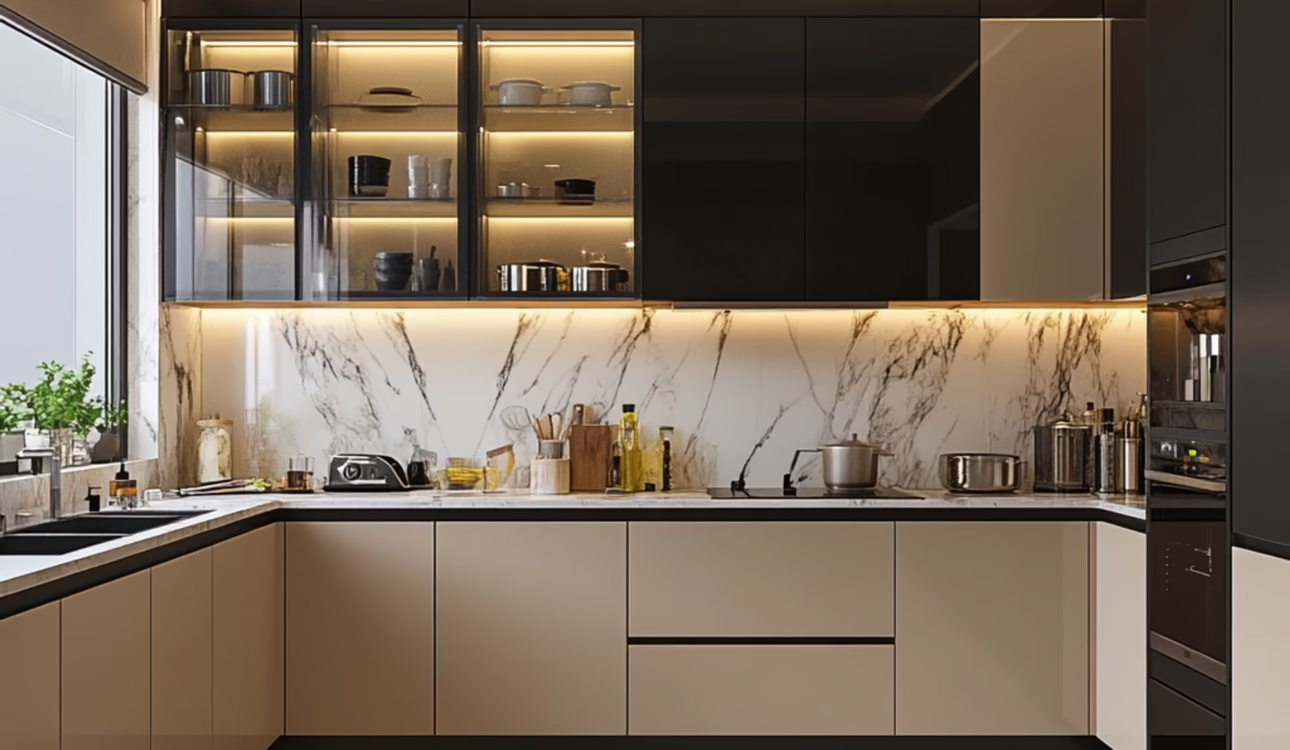
The powerhouse of kitchen layouts — three walls of counter space. Perfect for larger kitchens in villas and independent houses in areas like Jubilee Hills, Banjara Hills, and Kompally. Offers seamless multi-person cooking zones with dedicated prep, cooking, and washing areas on separate walls.
Parallel (Galley) Kitchen
Two parallel counters with a central aisle — highly efficient for narrow kitchens. Works well when the kitchen is physically separate from the dining area. Allows one wall for cooking and the other for prep and storage, keeping the workflow linear and fast.
Island Kitchen
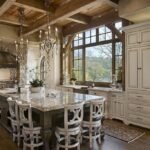
The pinnacle of open-plan luxury. A central island counter serves as a breakfast bar, prep zone, and visual anchor for the dining space beyond. Increasingly popular in Hyderabad’s premium gated communities in Gachibowli, Kondapur, and Manikonda. Requires a minimum kitchen width of 10–12 feet.
Materials That Last — A Hyderabad Kitchen Guide
Material selection is where most kitchen interior projects either succeed beautifully or fail expensively. Indian cooking environments are demanding — high heat, oil splatter, steam, and daily heavy use require materials that are engineered for performance, not just aesthetics.
Cabinet Carcass
BWR (Boiling Water Resistant) Plywood is the gold standard for kitchen cabinet carcasses in India. ISI-certified BWR plywood resists moisture, termites, and warping — essential in Hyderabad’s humid climate, particularly during the monsoon months. Avoid MDF or particle board for carcasses in Indian kitchens under any circumstances.
Shutter Materials
HDHMR (High Density High Moisture Resistant) boards provide the flattest, most durable surface for kitchen shutters and drawer fronts. Paired with the right finish — acrylic, PU, matte laminate, or membrane — HDHMR shutters retain their shape and finish far longer than regular MDF.
Shutter Finishes
- Acrylic / PU — High-gloss, reflective finish. Premium look, easy to clean. Slightly prone to scratching over years.
- Matte Laminate — Budget-friendly, understated, widely available. Excellent for contemporary minimal kitchens.
- Membrane / Vinyl Wrap — Suited for curved profiles and handleless shutters. Seamless appearance.
Countertops
- Granite — The time-tested Indian kitchen countertop. Heat-resistant, scratch-resistant, affordable. Available in a wide range of patterns and colours locally.
- Quartz / Engineered Stone — Non-porous, consistent patterning, premium appearance. Calacatta and Statuario quartz are extremely popular in Hyderabad’s luxury segment for 2026.
- Corian / Solid Surface — Seamless joins, integrated sink options, good for contemporary minimalist kitchens.
At Homasm Interiors, our partner brand Wood X Studio handles all premium wood surfaces, countertop materials, and feature panel solutions for kitchen and dining spaces.
Dining Room Interior Design — Creating the Gathering Space
The dining room is often the most underinvested space in Hyderabad homes, and yet it is where families spend the most intentional time together. A well-designed dining area does not require a large room — it requires thoughtful furniture selection, layered lighting, and a material palette that complements the kitchen without competing with it.
Table Sizing Guide
- 4-seater table — suitable for rooms under 100 sq. ft. or for nuclear families in compact apartments.
- 6-seater table — the most versatile size. Fits comfortably in standard 3BHK dining areas and expands for guests.
- 8-seater and above — for independent houses, villa dining rooms, and open-plan living areas with generous floor space.
Lighting — The Most Underrated Dining Room Decision
A pendant light or chandelier directly above the dining table is the single most impactful design element in any dining room. The rule: the pendant should hang 70–80 cm above the tabletop. Use warm white light (2700K–3000K) to create an intimate, welcoming atmosphere. Layer with wall sconces or cove lighting in the ceiling for depth after dark.
The Crockery Unit
A well-designed crockery unit with glass-shuttered upper cabinets and closed lower storage adds both function and character to the dining space. Choose a finish that echoes the kitchen — if your kitchen has charcoal matte lower shutters, carry that tone into the crockery unit for a cohesive look. Wood X Studio designs custom crockery units and buffets in solid wood, veneer, and lacquered finishes.
Feature Wall
Every dining room benefits from one strong feature wall — the wall the dining table sits against or the one visible from the living room. Options include:
- Fluted wood panelling with integrated cove lighting
- Textured wallpaper in a warm tone
- Marble-effect tiles or a stone cladding panel
- A custom-painted mural for more expressive interiors
Open-Plan Kitchen + Dining — The Hyderabad Trend of 2026
More Hyderabad homeowners are now opting to merge the kitchen and dining into a single open-plan zone — particularly in modern apartments in Gachibowli, Kondapur, and Manikonda. This approach creates a sociable, airy living environment but requires careful design to prevent the cooking zone from visually overwhelming the dining area.
How we zone open-plan kitchen + dining spaces:
- Material transition — A subtle change in tile pattern, flooring finish, or surface material at the boundary of the two zones creates a visual break without a physical wall.
- Lighting zones — Pendant lights over the dining table and task lighting over the kitchen counter define each zone independently within the same open space.
- Island or breakfast bar — A kitchen island or raised breakfast bar acts as a natural divider between the cooking zone and the dining area, providing additional seating and counter space.
- Ceiling treatment — A false ceiling drop or cove lighting zone change above the dining table distinguishes it architecturally from the kitchen ceiling.
Important: Open-plan Indian kitchens require careful chimney and ventilation planning. An underpowered chimney in an open kitchen can allow cooking smells and smoke to drift into the living and dining areas. We specify high-CFM chimneys and ductwork routing as part of every open-plan kitchen design.
Vastu Compliance in Kitchen Design
Vastu Shastra continues to hold significant influence in Hyderabad homeowner decisions — and with good reason. When followed thoughtfully, Vastu principles align closely with practical design logic.
- Kitchen direction — The southeast corner of the home is the ideal Vastu placement (Agni corner — fire element).
- Cooking platform — The stove should be placed on the eastern wall, with the cook facing east while cooking.
- Sink placement — The sink (water element) belongs in the northeast corner, kept away from the stove to avoid conflicting elements.
- Refrigerator — South or southwest corner, away from direct heat sources.
- Storage lofts — Heavier storage units are best on the south and west walls.
- Pooja integration — When a pooja niche is part of the kitchen or dining area, the northeast corner is the correct placement, kept clean and separate from cooking zones.
At Homasm Interiors, we design Vastu-compliant kitchens without compromising on modern functionality. Our designers work with the home’s existing structural constraints to achieve the best possible balance.
What Premium Kitchen Execution Actually Looks Like
There is a significant difference between a kitchen that is designed beautifully and one that is executed beautifully. Homasm Interiors is built around execution excellence — the site visits, the material sourcing, the installation supervision, and the quality checks that most design studios outsource to contractors.
Our 6-Step Execution Process:
- Site Assessment — Precise measurement, structural wall identification, existing plumbing and electrical mapping. We identify potential issues before design begins, not during installation.
- 3D Design Presentation — Full 3D kitchen layout rendered in your chosen finish palette before any material is ordered. You see exactly what you are getting.
- Material Procurement — Direct sourcing from verified suppliers with no third-party contractor markups. All carcass and shutter materials are quality-checked before leaving the supplier.
- Factory Manufacturing — Cabinets are manufactured in controlled workshop conditions for precise fitting — not cut on-site where errors compound.
- On-Site Installation — Our supervised installation team handles levelling, alignment, and fitting to millimetre accuracy. Plumbing connections, electrical points, and appliance fittings are coordinated simultaneously.
- Quality Sign-Off — Post-installation inspection covering doors, drawers, soft-close mechanisms, countertop sealing, backsplash grouting, appliance connections, and final cleaning. We do not hand over until it is right.
Kitchen & Dining Design Trends in Hyderabad — 2026
- Handleless modular kitchens — Push-to-open shutters (J-profile or aluminium channel profile) create a seamless, clutter-free aesthetic extremely popular in HiTech City corridor apartments.
- Two-tone colour palettes — Warm wood-tone lower cabinets paired with white, sage green, or dusty blue uppers for visual depth.
- Integrated appliances — Built-in ovens, concealed chimneys, and panel-matching refrigerators that disappear into the cabinetry for a furniture-like kitchen.
- Statement countertops — Book-matched marble-effect quartz, Calacatta-inspired surfaces, and waterfall island edges replacing plain black granite as the premium countertop of choice.
- Warm dining lighting — Cluster pendants over dining tables, wall-mounted sconces, and cove lighting in ceiling recesses creating layered, restaurant-quality ambience at home.
- Biophilic elements — Indoor herb gardens on kitchen window ledges, terracotta tile accents, and natural stone panels in the dining feature wall bringing organic texture into modern interiors.
Frequently Asked Questions
Q: What is the cost of modular kitchen interior design in Hyderabad?
Modular kitchen costs in Hyderabad typically range from ₹1.5 lakh to ₹6 lakh depending on size, layout, materials, and finish. Premium kitchens with quartz countertops, handleless shutters, and integrated appliances can exceed ₹8–10 lakh for larger spaces. Homasm Interiors provides a detailed itemised quotation after a free site assessment with no hidden costs.
Q: How long does kitchen interior design and execution take?
A standard modular kitchen project takes 4–6 weeks from design sign-off to handover. Custom woodwork, stone countertops, and appliance connections may extend larger projects to 8 weeks. Dining room elements can often be executed in parallel.
Q: Which kitchen layout is best for Indian apartments in Hyderabad?
L-shaped kitchens are the most popular choice for Hyderabad’s 2BHK and 3BHK apartments — efficient, storage-rich, and well-suited to Indian cooking. U-shaped layouts suit larger kitchens in independent houses. Island kitchens are the premium choice for open-plan homes in gated communities.
Q: Does Homasm Interiors follow Vastu guidelines?
Yes — we design Vastu-compliant kitchens wherever required and structurally possible, without compromising on modern functionality. Our designers discuss your Vastu requirements during the initial consultation.
Q: Can the kitchen and dining area be designed as one open-plan space?
Absolutely — and it is one of the most requested approaches for 2026. We use material transitions, lighting zones, island counters, and ceiling treatments to zone both spaces while maintaining the open feel. Ventilation design is a key consideration we handle from the start.
Q: What materials does Homasm Interiors use for kitchen cabinets?
ISI-certified BWR plywood for carcasses, HDHMR boards for shutters, and granite, quartz, or Corian for countertops — depending on budget and preference. Our partner brand Wood X Studio handles all premium wood and surface solutions.
Q: Does Homasm also design the dining room?
Yes — and we strongly recommend designing kitchen and dining as a unified project for material continuity, lighting coordination, and overall visual coherence. Contact us to discuss your full scope.
Homasm Interiors — Your Interior Execution Partner 📍 Ameerpet, Hyderabad · 📞 +91 97011 05981 · 🌐 homasm.com